
Supporting Your Dancing Child: Why Parents Need Clearer Guidance in Dance Sport
- Nicole Cutler

- May 29
- 5 min read
Updated: Jun 10
Supporting a child in Dance Sport is not only about lessons, practice and results.
It is also about the quiet moments around the dancing: the reassurance before a performance, the space after disappointment, the steady presence when confidence feels fragile, and the understanding that the child comes before the outcome.
This article explores why parents need clearer guidance around child development, competition pressure, digital visibility and emotional wellbeing in Dancesport.

Many parents enter the Dance Sport world through their child’s enjoyment.
At first, it may be about music, movement, lessons, friendships and the excitement of taking part. A child begins to learn new skills, experience achievement, and discover something that gives them confidence and joy.
Over time, however, that landscape can become more complex.
Lessons may become more regular. Practice may increase. Competitions may begin to shape weekends and family routines. Results, costumes, partnerships, coaching decisions, social media, travel and comparison can all become part of the experience.
What began as a simple activity can gradually become something that carries more emotional weight for the child and the family around them. For many parents, this is where uncertainty begins.
A child may become nervous before a competition, upset after a correction, unusually tired during a busy period, or more affected by comparison than expected. They may seem confident one week and unsettled the next. They may want to dance, but still find certain parts of the environment difficult to manage.
From the outside, it is not always easy to know what these moments mean.
Is this part of normal childhood development? Is it part of learning to cope with performance? Is it tiredness, pressure, growth, sensitivity, or something that needs closer attention?
This is often where parents need more than encouragement. They need context.
Dance Sport sits in a particular space. It involves physical training, technical skill, artistic expression, competition, public performance and social visibility. Children experience elements that belong to both youth sport and the performing arts, yet Dance Sport does not always sit clearly within the formal structures that support either field.
This can leave families without one clear place to turn for guidance on age-appropriate training, emotional wellbeing, safeguarding, digital visibility, performance pressure and long-term participation.
The result is that many parents are left to interpret things for themselves.
A child’s experience in dance is shaped by far more than steps and technique. Growth, coordination, sleep, emotional maturity, school pressure, peer relationships, confidence and family routines all influence how a young dancer feels and performs.
A child who seems distracted, tearful, inconsistent or reluctant may not be lacking commitment. They may be tired. They may be overwhelmed. They may be going through a growth phase. They may be struggling with comparison. They may not yet have the words to explain what they are feeling.
Understanding this changes how adults respond.
Growth spurts can temporarily affect balance, posture and coordination. Puberty can influence confidence, body awareness, stamina and emotional sensitivity. Cognitive skills such as attention, sequencing, planning and impulse control develop gradually. Children of the same age may therefore be at very different stages, even when they appear to be training in the same environment.
This is one reason comparison can be so unhelpful.
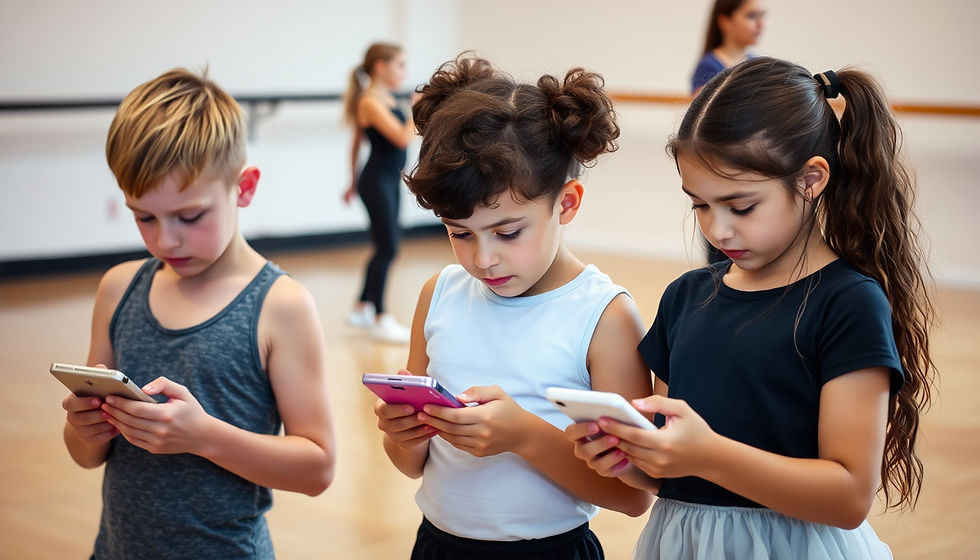
In Dance Sport, comparison can begin early. Children may compare themselves with classmates, competitors, older dancers, professionals, or images and videos they see online. Digital media can intensify this, because children are not only dancing in the room; they are often watching, posting, being seen, and measuring themselves against carefully selected moments from other people’s journeys.
Visibility can bring encouragement and opportunity, but it can also create pressure.
Likes, views, reels, livestreams and shared competition clips can all influence how young dancers see themselves. For some children, this becomes motivating. For others, it can become emotionally heavy, especially when they begin to connect their worth with how they appear, how often they are seen, or how they compare with others.
Parents do not need to remove every difficulty from a child’s path. Difficulty is part of learning.
Nerves, disappointment, frustration, tiredness and fluctuating confidence can all appear within a healthy dance journey. The aim is not to protect children from every uncomfortable feeling, but to help them understand those feelings without shame.
Often, the most helpful support is simple and steady.
A calm adult presence before a performance can make a significant difference. Predictable routines, enough sleep, food and hydration, gentle reassurance and time to settle after dancing all help a child feel safer within a demanding environment.
After a competition, many children need warmth before analysis. They may need space before questions. They may not be ready to talk about results, technique or what went wrong.
Sometimes the most useful questions are the quiet ones: What did you enjoy today? What felt good? Was there anything difficult? Do you want to talk now, or later?
These small moments help keep the focus on the child’s experience, not only the outcome.
Parents also play an important role in noticing when something needs closer attention.
If a child becomes persistently anxious, repeatedly distressed, unusually withdrawn, reluctant to attend class, or affected by changes in sleep, appetite, mood or behaviour, it may be worth looking more carefully at what is happening.
Sometimes a calm conversation with the teacher can provide useful clarity. At other times, support from a GP, school pastoral team, safeguarding lead, or registered mental-health professional may be appropriate.
Asking questions is not an overreaction. It is part of responsible support.
Healthy participation in Dance Sport depends on the adults around the child working with awareness. Parents, teachers, coaches, organisers and adjudicators all influence the environment in which young dancers grow. When expectations are age-appropriate, communication is calm, training is balanced and wellbeing is taken seriously, children are more likely to develop confidence, resilience and a lasting relationship with dance.
The parent guide, Supporting Your Dancing Child, was developed to help families approach these experiences with greater clarity.
It brings together recognised principles from child development, youth sport, safeguarding and performing arts education, interpreted within the specific demands of Dance Sport. It is not a clinical document and does not replace professional advice. Its purpose is to offer accessible, balanced information that helps parents understand what may be happening beneath the surface of a child’s dance experience.
Dance Sport can offer children discipline, artistry, friendship, courage and joy.
With thoughtful adult support, it can also become a place where children learn how to manage effort, disappointment, growth, self-expression and confidence in a healthy way.
The more clearly we understand the child within the dancer, the better placed we are to support both.
For more detailed guidance, including practical tools, communication prompts, and signposting to trusted organisations, download the full Supporting Your Dancing Child: A Parent Guide from the Dance Sport Trust Resources and Guides Section.


Comments